
Hurricane Lala Skirts Hawaii’s Big Island as Heavy Rain and Damaging Winds Spread West
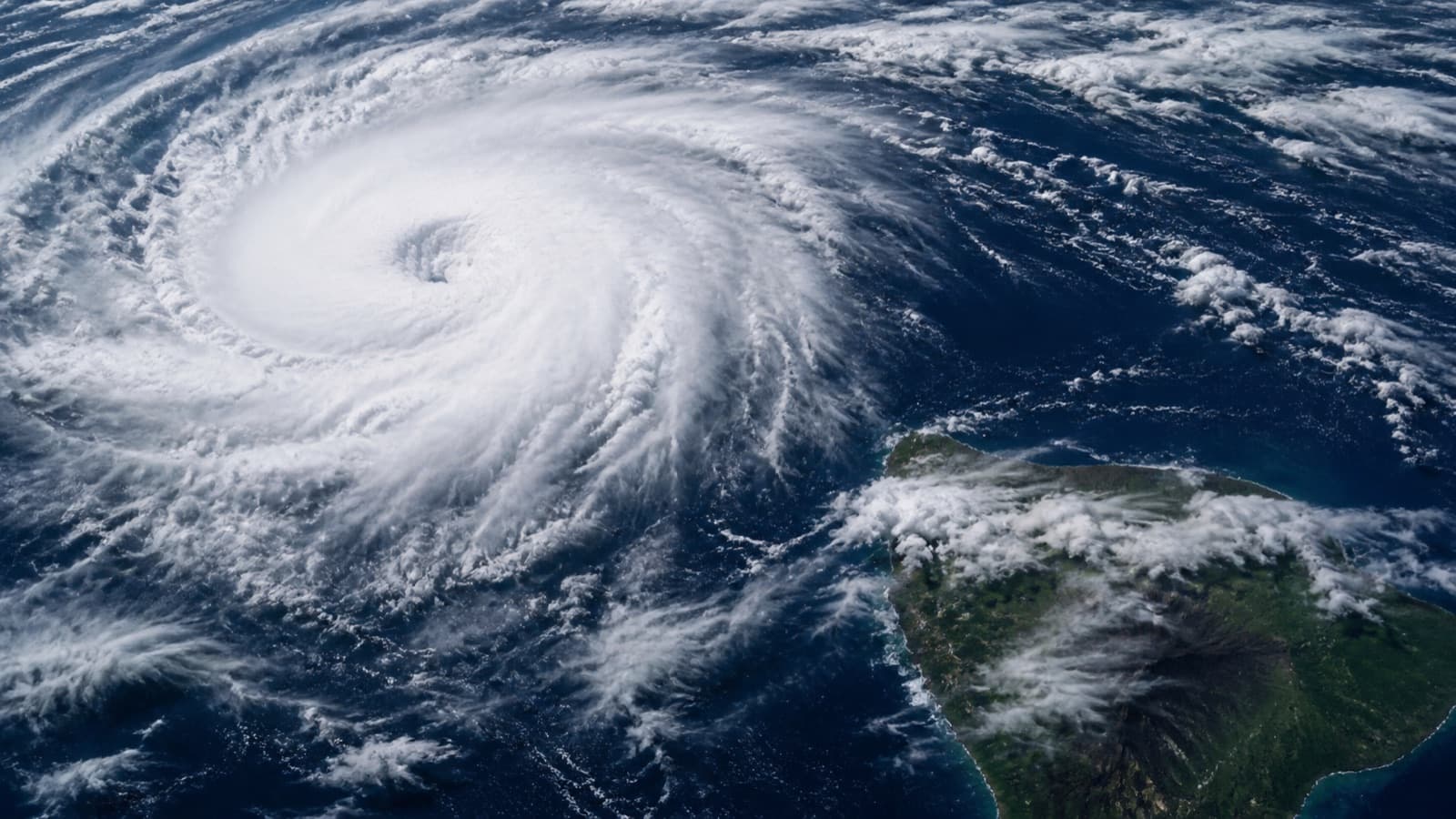
Hurricane Lala approaches Hawaii in this editorial illustration depicting the storm over the Pacific Ocean.
Photo: AI-generated illustration by Arizona Asians
Hurricane Lala passed south of Hawaii’s Big Island with 75 mph winds as forecasters warned of life-threatening flooding, mudslides, damaging winds and dangerous surf across the island chain.
Hurricane Lala moved past the leeward side of Hawaii’s Big Island Saturday evening, bringing damaging winds, torrential rain and dangerous coastal conditions while continuing toward the northwest. As of 8 p.m. Hawaii Standard Time, the storm was approximately 55 miles west of South Point and 175 miles south-southeast of Honolulu. Lala had maximum sustained winds of 75 mph, making it a Category 1 hurricane, and was moving northwest at 10 mph, according to the Central Pacific Hurricane Center. Although the storm’s center passed south of the Big Island, forecasters warned that its large wind field would continue affecting communities across the Hawaiian Islands.
Heavy Rain Raises Flood and Mudslide Threat
Forecasters said Lala could produce 10 to 20 inches of rain across the Big Island, with isolated totals reaching 25 inches.
Windward Maui could receive an additional 8 to 12 inches, while other islands may receive between 4 and 6 inches, with locally higher amounts possible.
The rainfall could cause life-threatening flash flooding, overflowing streams and mudslides, particularly in steep terrain. Residents and visitors were advised not to drive through flooded roads and to follow instructions from local emergency officials.
Hurricane and Tropical Storm Warnings Continue
A hurricane warning remained in effect for Hawaii County, where hurricane conditions were expected to persist overnight. Forecasters said higher elevations could experience winds significantly stronger than those measured near the surface.
Tropical storm warnings covered:
Maui County, including Maui, Lanai, Molokai and Kahoolawe
Oahu
Kauai County, including Kauai and Niihau
Damaging winds and heavy rain were expected to spread westward across Oahu and Kauai County on Sunday.
Dangerous Surf and Coastal Flooding
Lala was also generating large swells along exposed windward and southern shores. Forecasters warned of life-threatening surf, powerful rip currents and coastal flooding. A storm surge of approximately one to three feet above normally dry ground was possible along parts of Hawaii’s coastline, especially if the peak surge coincided with high tide. Large waves could make conditions even more dangerous near beaches, harbors and low-lying coastal roads.
Gradual Weakening Expected
Lala was expected to continue northwest overnight before turning more toward the west and increasing its forward speed Sunday.
The storm’s core was forecast to remain south of the smaller main Hawaiian Islands. Gradual weakening was expected as Lala passed south of the island chain, although forecasters said some restrengthening could occur early in the coming week.
Residents and travelers should continue monitoring official forecasts because small changes in the storm’s track could significantly alter local conditions.
For current warnings and forecasts, visit the National Hurricane Center and Central Pacific Hurricane Center and the National Weather Service Honolulu office.
Suggested excerpt:
Category: U.S. News / Weather
Suggested tags: Hurricane Lala, Hawaii, Big Island, Honolulu, Tropical Weather, Flooding, Central Pacific
Primary source: Central Pacific Hurricane Center’s Hurricane Lala advisory
Editorial note: Arizona Asians independently prepared this article using official information from NOAA, the National Hurricane Center and the National Weather Service. Storm conditions and warnings can change quickly. Readers in affected areas should rely on the latest official emergency instructions.
Topics
Source: Central Pacific Hurricane Center’s Hurricane Lala advisory
View original source ↗Editorial Note: Arizona Asians independently prepared this article using official information from NOAA, the National Hurricane Center and the National Weather Service. Storm conditions and warnings can change quickly. Readers in affected areas should rely on the latest official emergency instructions.