
Indian Space Startup Skyroot Aerospace Makes History with Successful Vikram-1 Orbital Launch
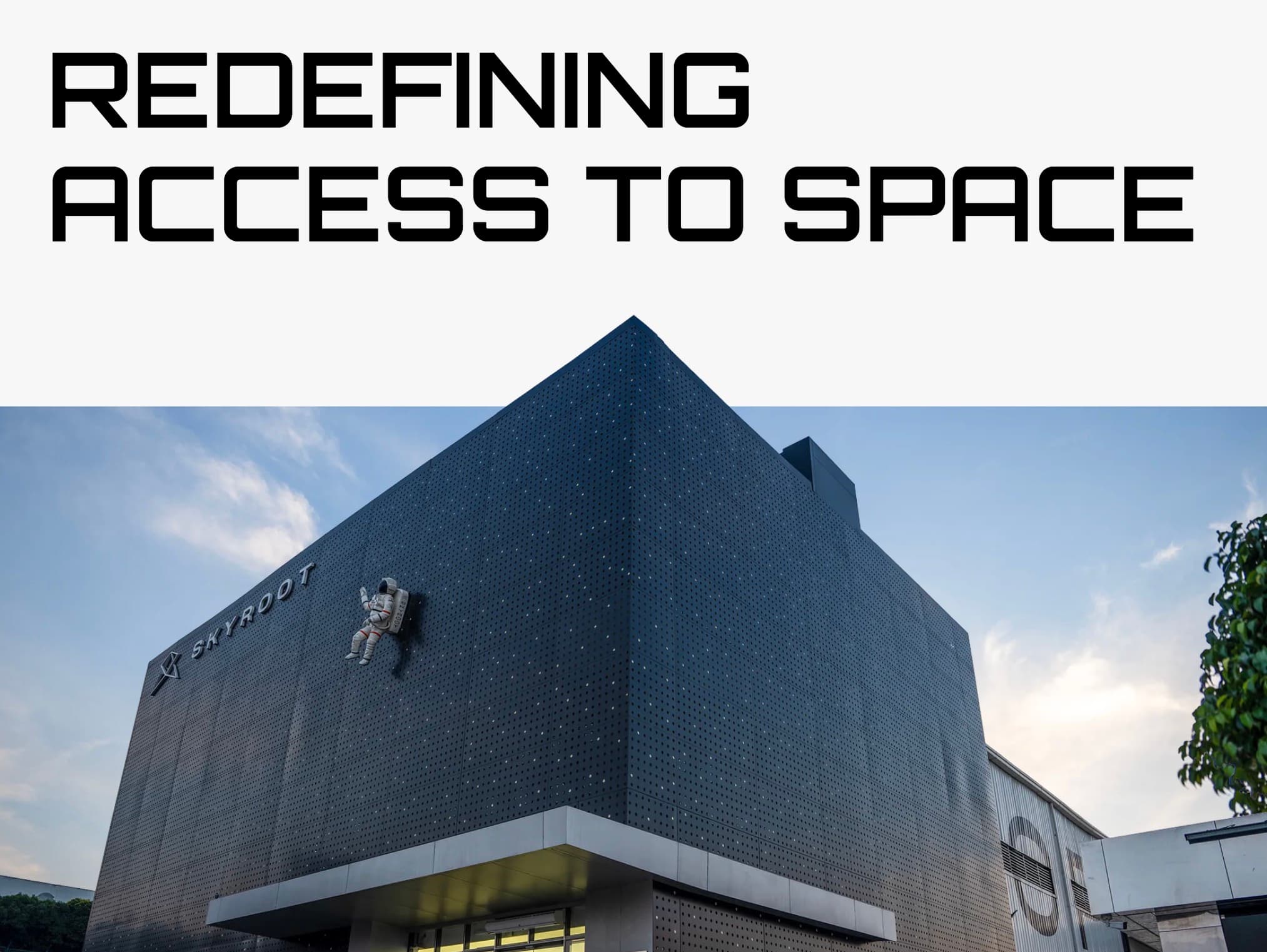
Indian Space Startup Skyroot Aerospace Makes History with Successful Vikram-1 Orbital Launch
SRIHARIKOTA, INDIA - In a monumental leap for India’s private space sector, Hyderabad-based aerospace startup Skyroot Aerospace has successfully launched its premier orbital rocket, Vikram-1, into low Earth orbit. The landmark flight, dubbed "Mission Aagaman" (The Arrival), marks India’s entry into the elite club of nations capable of private commercial satellite launches and introduces a highly flexible player to the global small-satellite launch market. The rocket lifted off from the Satish Dhawan Space Centre in Sriharikota, carrying a payload consisting of the "Cosmic Bloom" satellite alongside other experimental payloads. Ground control confirmed that the vehicle achieved its target orbit with high precision, deploying the payloads exactly as planned. A Tech Marvel Made in India
The rocket lifted off from the Satish Dhawan Space Centre in Sriharikota, carrying a payload consisting of the "Cosmic Bloom" satellite alongside other experimental payloads. Ground control confirmed that the vehicle achieved its target orbit with high precision, deploying the payloads exactly as planned.
A Tech Marvel Made in India
The Vikram-1 is a multi-stage launch vehicle specifically optimized for the rapidly growing small-satellite market. Skyroot’s design prioritizes high customization, quick turnaround times, and structural excellence. Key technical achievements validated by the flight include:
Advanced Materials: An all-carbon-composite structure that drastically reduces weight while maintaining extreme structural integrity.
Cutting-Edge Propulsion: Reliable solid-fuel boosters paired with a 3D-printed liquid engine for precise orbital insertion maneuvers.
Capacity: Designed to carry up to 350 kg to Low Earth Orbit (LEO) and up to 260 kg to Sun-synchronous Orbit (SSO).
Building on Past Triumphs
This milestone follows the company’s historic November 2022 "Mission Prarambh," where their suborbital rocket, Vikram-S, became the first privately developed Indian rocket to reach space.
"We are opening space for all," Skyroot's leadership shared following the successful orbital insertion, emphasizing their goal to break down barriers for global tech firms, research institutions, and commercial enterprises needing rapid, on-demand access to space.
What's Next for Skyroot?
With Vikram-1 successfully operational, Skyroot Aerospace is already looking toward the next horizon. The company has actively begun development on its next-generation heavy lifter, Vikram-II. Scheduled for its debut in 2027, the upgraded vehicle will feature an advanced cryogenic engine and push payload capacities up to 900 kg to LEO.
As the global demand for small satellite constellations continues to soar, Skyroot’s successful mission positions India not just as a powerhouse for state-sponsored space exploration via ISRO, but as a premier, cost-effective hub for commercial space logistics.