
Kremlin Backs Security Council Reform, Says U.N. Veto Powers Should Stay
Kremlin Backs Security Council Reform, Says U.N. Veto Powers Should Stay
Photo: AI Image generated by Arizona Asians
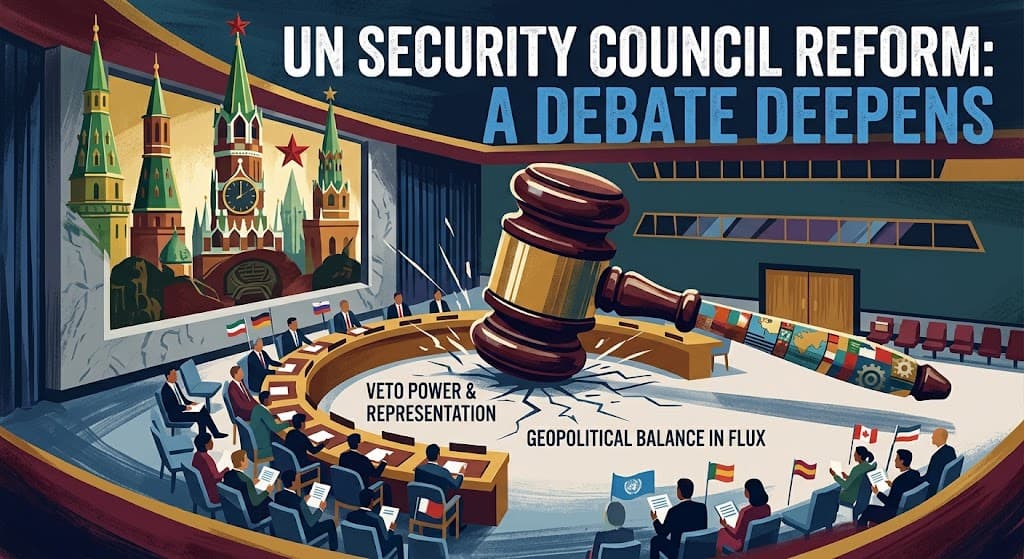
The Kremlin says it supports reform of the U.N. Security Council, but insists the five permanent members and their veto power should remain intact. The position aligns with long-standing Russian arguments that the veto is essential to global stability, even as many other countries press for broader changes.
Russia says it supports reform of the United Nations Security Council, but only if the body’s five permanent members keep their status and veto powers. The Kremlin’s position, repeated in comments published around the opening of the U.N. General Assembly week, places Moscow firmly in the camp of states arguing that any overhaul must preserve the council’s founding structure. The U.N. Security Council currently has five permanent members — China, France, the Russian Federation, the United Kingdom and the United States — and 10 rotating members elected by the General Assembly.
The issue is consequential because the Security Council remains the U.N.’s main body for decisions on international peace and security, and the veto gives each permanent member the ability to block resolutions. Russia has long argued that the veto is not a flaw but a safeguard against direct confrontation among major powers. That view contrasts with reform advocates who say the veto has often contributed to paralysis on crises ranging from war to humanitarian emergencies.
The Kremlin’s latest comments are consistent with Russia’s earlier public positions on the council. In past official statements, Russian leaders have said the U.N. should be made more representative, but without stripping the permanent members of their special role. The U.N. itself says the council was designed in 1945 with permanent membership and veto authority as part of the postwar balance of power.
Moscow’s reform line stays tied to veto authority
The Russian position appears aimed at supporting limited institutional change while rejecting proposals that would dilute the power of the council’s most influential members. That approach has been echoed in Russian diplomatic messaging for years, including arguments that reform should better reflect the interests of Asia, Africa and Latin America without altering the core privileges of the permanent five. The Kremlin’s line also comes as debate over Security Council reform continues at the United Nations, where many member states have pushed for broader representation and, in some cases, limits on the use of the veto.
For now, Moscow is signaling that it sees reform as acceptable only within strict boundaries. Any meaningful change to the council’s structure would still require broad international agreement, and Russia’s insistence on keeping the veto underscores how difficult that consensus is likely to be.
Topics
Source: United Nations
View original source ↗