
Pope Leo ends France visit with call for reconciliation over division in Europe
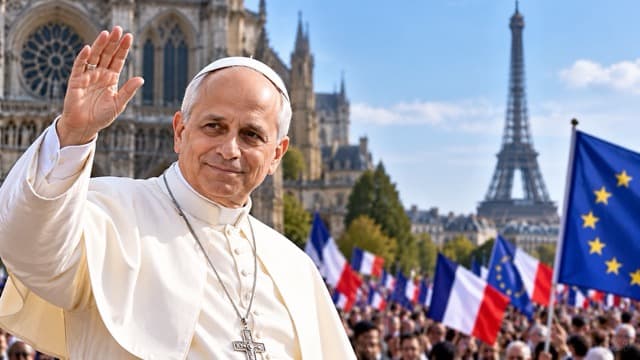
Pope Leo ends France visit with call for reconciliation
Photo: Arizona Asians / AI-generated image
Pope Leo XIV closed his France trip in Metz on Sept. 28 with a message aimed at Europe’s political and religious leaders, urging reconciliation, dialogue and multilateral cooperation over nationalism and conflict. His remarks drew on the legacy of Robert Schuman and the postwar European project.
Pope Leo XIV ended his apostolic journey to France on Sept. 28 with a forceful appeal for Europe to reject nationalism, division and the logic of domination, instead embracing reconciliation, dialogue and peace. Speaking in Metz, he linked those themes to the postwar work of Robert Schuman, the French statesman widely regarded as one of the architects of European integration.
The pope’s remarks came during a public meeting at the Robert Schuman Conference Center, where he was welcomed by French President Emmanuel Macron and church leaders. The gathering was framed around “peace and unity,” and Leo used it to warn that war has returned to Europe and that the continent must resist what he called a “senseless slaughter” affecting civilian lives.
Metz carried particular symbolism for the message. The city and the surrounding region changed hands repeatedly between France and Germany through two world wars, making it a lasting emblem of the reconciliation that helped shape modern Europe. Leo cited that history as evidence that bitter conflict can give way to cooperation when former rivals choose common institutions over confrontation.
A call rooted in Europe’s postwar history
Leo repeatedly invoked Schuman, whose 1950 declaration helped lay the groundwork for what became the European Union. The pope described Schuman as a leader who understood the need to overcome opposition between cultural identities and build multilateral institutions after a war that exposed what human beings can do when they believe nothing restrains their power.
In a broader reflection on Europe, Leo said the continent’s identity was shaped not only by geography but by centuries of exchange, Christian influence and efforts to build common life after conflict. He argued that Christianity contributed a moral foundation centered on human dignity, responsibility and dialogue, and said Europe owes a debt to that tradition.
The pope also extended his appeal beyond politics. During an interreligious meeting in Metz, he said religion must help disarm hearts and words rather than justify violence or oppression. He stressed that unity does not require erasing differences and said people of faith share a responsibility to meet one another across borders and seek peace.
Leo concluded his France visit with a homily at Metz’s Cathedral of St. Stephen, where he said reconciliation is possible only when people break the chains of resentment. The Vatican said the Sept. 25-28 trip included meetings with French authorities, church leaders and others, as well as a stop in Metz focused on Europe, peace and unity.
Video
Topics
Source: Vatican Press Office
View original source ↗