
Tensions Escalate in Strait of Hormuz as Trump Threatens Iranian Infrastructure
Tensions Escalate in Strait of Hormuz as Trump Threatens Iranian Infrastructure
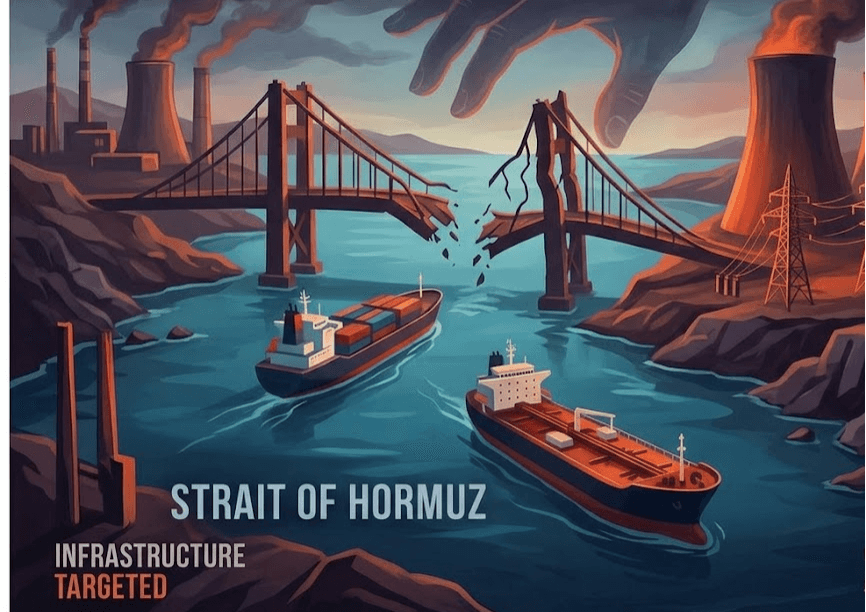
President Donald Trump issued a stern warning to Tehran on Wednesday, declaring that the United States will target Iranian infrastructure—including bridges and power plants—every time an attack is launched against shipping in the Strait of Hormuz. The announcement marks a significant escalation in rhetoric surrounding one of the world’s most critical maritime chokepoints, raising fresh concerns over global energy markets, international trade routes, and regional stability.
A Critical Artery for Global Trade
Connecting the Persian Gulf to the Gulf of Oman, the Strait of Hormuz carries a massive share of the world’s daily oil supply and serves as a key route for merchant traffic between Western Asia, Asia-Pacific, and global markets.
For Arizona’s business leaders, tech sector, and consumers, ongoing instability in the waterway carries far-reaching economic implications:
Energy & Shipping Costs: Heightened friction along major trade corridors frequently triggers volatility in global oil prices, driving up transportation overhead and fuel costs across the U.S.
Supply Chain Impact: Disruptions in maritime navigation risk delays and increased insurance fees for international shipping lines, adding friction to interconnected global supply chains.
Warning Sent to Tehran
The President’s hardline statements come as commercial and military vessels face ongoing security risks in the region.
"The United States will target Iranian infrastructure, including bridges or power plants, each time Tehran targets a ship in the Strait of Hormuz."
While the administration did not detail the precise timeline or operational specifics of prospective military actions, the message signals a strict deterrence posture aimed at deterring further disruptions to freedom of navigation.
Iranian officials did not immediately issue a direct response to the announcement, leaving uncertainty regarding whether the directive signifies a shift in broader U.S. military strategy or stands as a specific deterrent against future maritime incidents.
What to Watch
As governments and energy analysts monitor the situation closely, the key factors for the Arizona community and global stakeholders include:
Market Reactions: Fluctuations in oil futures and global trade indexes in response to military developments.
Maritime Security Updates: Official directives from maritime authorities regarding shipping lanes and commercial transit protocols.
Diplomatic Developments: Potential responses or countermeasures from international coalition partners and regional actors.