
U.S. Travel Advisories: Countries Americans Are Urged to Avoid and Where Extra Caution Is Needed
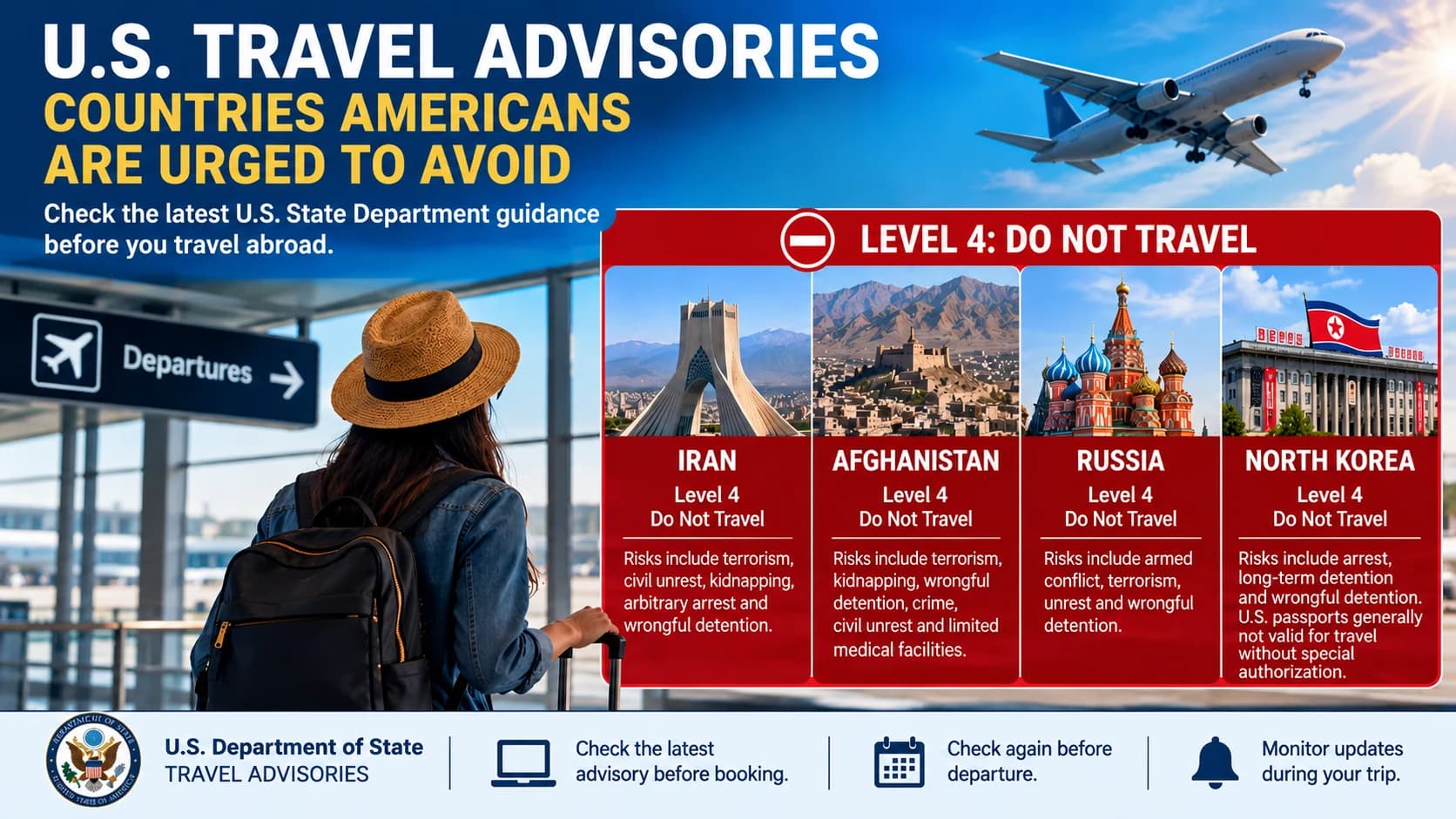
U.S. travel advisory infographic highlighting Level 4 Do Not Travel warnings for Iran, Afghanistan, Russia and North Korea.
Photo: Arizona Asians/AI Generated Image
The U.S. State Department advises Americans not to travel to countries including Iran, Afghanistan, Russia and North Korea.
Americans planning international travel should check the latest U.S. State Department travel advisories before making reservations, particularly when visiting countries affected by conflict, terrorism, wrongful detention or civil unrest.
The State Department uses four advisory levels, ranging from Level 1 — Exercise Normal Precautions to Level 4 — Do Not Travel.
Several countries currently carry the highest Level 4 warning.
Countries Under “Do Not Travel” Guidance
Iran — Level 4
The State Department advises Americans not to travel to Iran for any reason because of risks including terrorism, civil unrest, kidnapping, arbitrary arrest and wrongful detention.
The advisory was updated on October 23, 2026. The United States does not have an embassy in Iran, significantly limiting assistance available to U.S. citizens.
Afghanistan — Level 4
Americans are advised not to travel to Afghanistan because of terrorism, kidnapping, wrongful detention, crime, civil unrest and limited medical facilities.
The U.S. Embassy in Kabul has been closed since 2021, and the U.S. government has very limited ability to assist Americans inside the country.
Russia — Level 4
The State Department advises against all travel to Russia because of risks including terrorism, unrest and wrongful detention.
U.S. citizens currently in Russia are advised to leave. American consular services in the country are significantly limited.
North Korea — Level 4
Americans are advised not to travel to North Korea because of the continuing risk of arrest and wrongful detention.
U.S. passports are generally not valid for travel to North Korea without special authorization from the State Department.
Check Before You Travel
Travel advisory levels can change quickly because of wars, political instability, terrorism, natural disasters or changes in diplomatic relations.
Travelers should check the State Department website:
before booking international travel,
shortly before departure,
and during a trip if conditions are changing.
Americans traveling abroad can also enroll in the State Department's Smart Traveler Enrollment Program, or STEP, to receive security alerts and help U.S. embassies contact them during an emergency.
The key distinction is simple: Level 4 means the U.S. government recommends avoiding the destination, while Level 2 destinations such as India and China remain open to travel but require additional caution.
Topics
Source: U.S. Department of State — Travel Advisories
View original source ↗Editorial Note: Arizona Asians prepared this article based on current U.S. Department of State travel advisories. Advisory levels and security conditions can change, so travelers should verify the latest official guidance before departure.