
US Visa Bulletin for November 2026 Holds EB-2 for India Steady as EB-3 Moves Ahead
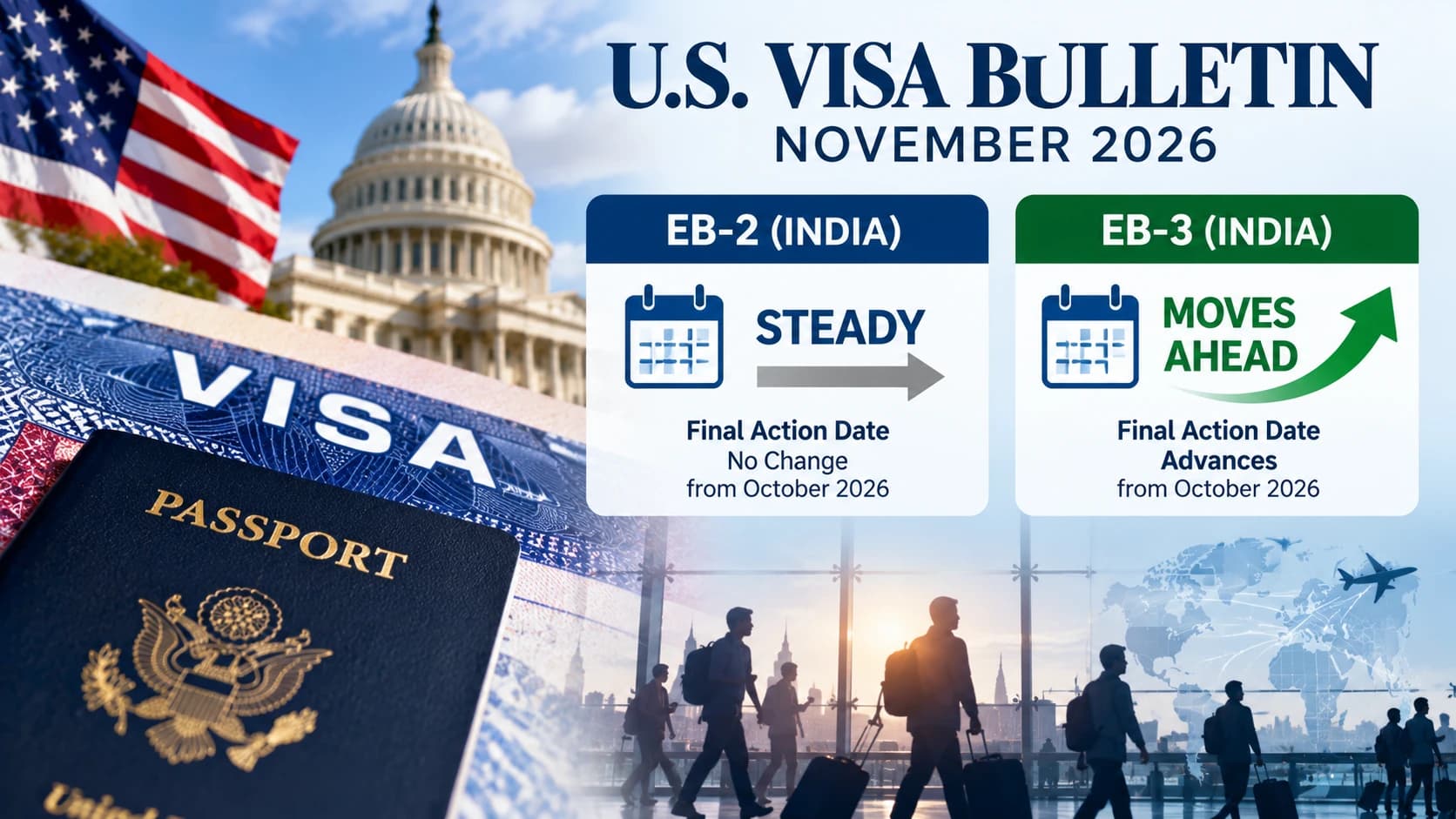
November 2026 U.S. Visa Bulletin, with India’s EB-2 employment-based category unchanged while EB-3 moves forward compared with October
Photo: Arizona Asians / AI-generated image
The State Department’s November 2026 Visa Bulletin leaves India’s EB-2 final action date unchanged at November 1, 2013, while EB-3 for India advances to January 22, 2014. The update offers modest relief for some green card applicants, but the broader backlog remains severe for many employment-based categories.
The U.S. State Department’s November 2026 Visa Bulletin brings a mixed picture for Indian green card applicants: the EB-2 final action date remains stuck at November 1, 2013, while EB-3 for India advances to January 22, 2014. The update matters because final action dates determine when immigrant visas can actually be issued, not just when an applicant can prepare paperwork.
For applicants born in India, the bulletin shows only limited movement in the employment-based categories most closely watched by workers already waiting in the U.S. and by those pursuing immigrant visas abroad. EB-2 remains one of the most backlogged categories, while EB-3’s modest forward movement may help some applicants whose priority dates now fall before the new cutoff.
The November bulletin, posted by the State Department, is the second visa bulletin of fiscal year 2027. It sets both final action dates, which govern visa issuance, and dates for filing, which determine when applicants may submit supporting documents or adjustment applications if the government allows that chart to be used that month.
What changed in the employment-based charts
In the final action chart, EB-2 for India stayed at November 1, 2013. EB-3 for India moved forward to January 22, 2014. The bulletin also shows EB-2 dates moving for other countries, including China, Mexico and the Philippines, but India’s EB-2 line did not advance.
The State Department’s filing chart also shows different movement, but that chart is only relevant if U.S. Citizenship and Immigration Services authorizes its use for adjustment-of-status filings in a given month. The bulletin directs applicants to USCIS guidance for that determination.
The visa bulletin is closely watched in immigrant communities because even small date changes can affect when a family or employer-sponsored case can move forward. For Indian nationals, long waits in EB-2 and EB-3 have been a persistent feature of the employment-based green card system, which is constrained by per-country limits and demand.
The bulletin also notes the standard rule that applicants whose priority dates are earlier than the posted cutoff may be able to assemble and submit required documents, subject to the National Visa Center’s instructions. For many applicants, the practical significance of the monthly update is whether a case can continue toward final processing or must remain in queue.
Even with the EB-3 advance, the November update leaves many Indian applicants facing years of waiting. The next bulletin will determine whether the modest movement continues or whether the dates hold steady again.
Topics
Source: U.S. Department of State
View original source ↗